

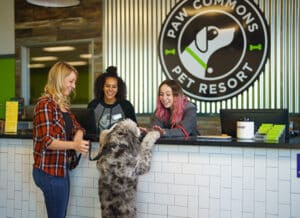
 Dog boarding has changed dramatically over the past several decades. For many years, the industry was simple and straightforward. When families traveled, they brought their dog to the kennel. That phrase was widely understood. A kennel was simply the place where dogs stayed while their owners were away. Dogs were fed, given water, taken outside for bathroom breaks, and kept safe until their families returned.
Over time, however, dog ownership began to change. Dogs increasingly became members of the family rather than simply household pets. As that shift occurred, expectations around dog care began to evolve as well. The result was a gradual transformation of the dog boarding industry.
At Paw Commons Pet Resorts & Training Centers, our team has had a front-row seat to that evolution. Since opening in 1999, Paw Commons has cared for more than one million dogs and delivered millions of days of daycare and boarding across its facilities in California and Arizona. That long-term operational experience provides a unique perspective on how the industry has changed and why modern dog care looks very different from the kennel model that existed decades ago.
What Traditional Dog Kennels Were Designed to Do
For much of the twentieth century, dog boarding was centered around the traditional kennel model. These facilities were designed primarily around sanitation, durability, and practicality. Dogs were typically housed in individual runs that allowed staff to maintain a clean environment while safely caring for multiple animals.
Common kennel features included:
- Indoor or indoor–outdoor runs
- Concrete flooring for sanitation
- Steel or chain-link partitions
- Scheduled feeding routines
- Regular cleaning protocols
- Scheduled bathroom breaks
Many kennel operators cared deeply about animals and worked hard to provide safe care. However, the facilities themselves were designed for efficiency rather than enrichment or comfort.
For many years, this model met the expectations dog owners had at the time.
Why Dog Owners Began Expecting More Than Traditional Kennels
Over the past few decades, dogs have increasingly become central members of the family. As that shift occurred, dog owners began looking for care environments that offered more than basic housing. Owners started seeking facilities that provided:
- Exercise opportunities
- Safe social interaction
- Enrichment and activity
- Comfortable boarding spaces
- Clear supervision and safety protocols
These changing expectations helped drive the next stage in the evolution of dog boarding. Facilities began adapting to provide more thoughtful environments designed specifically for dog care.
How Modern Pet Resorts Changed Dog Boarding
In response to these new expectations, the pet resort model began to emerge. Pet resorts are typically purpose-built facilities designed specifically for dog care rather than adapted from existing buildings. Many offer structured activity programs along with safe overnight accommodations. Modern pet resorts often include:
- Climate-controlled boarding spaces
- Structured daycare programs
- Outdoor play environments
- Grooming services
- Professional dog training
Over time, experienced operators began recognizing that facility design plays a major role in dog safety and comfort. Airflow systems, sanitation infrastructure, and thoughtful facility layout all contribute to creating environments where dogs can stay safely and comfortably.
How Cage-Free Dog Daycare Changed the Dog Care Industry
As pet resort construction became more expensive, new models also began appearing in the industry. One of the most common is cage-free dog daycare. In this model, dogs spend much of their day in shared open environments with other dogs while staff members supervise group interactions. For highly social dogs, these environments can provide valuable exercise and interaction. However, managing group play requires careful supervision and experienced handlers to ensure dogs remain safe and comfortable. Different dogs respond differently to these environments, which is why many facilities evaluate dogs before introducing them to group play.
How App-Based Pet Sitting Expanded Dog Care Options
Technology has also influenced the evolution of dog care. Platforms that connect pet owners with sitters have expanded the number of people offering pet care services. Instead of boarding their dog at a facility, some owners choose to have a sitter visit their home or care for the dog in the sitter’s residence. While this option can provide convenience, experience levels and safety standards may vary significantly between sitters. As a result, today’s dog owners often compare several different care environments before choosing the option that best fits their dog.
Types of Dog Boarding and Dog Care Available Today
Today’s dog care industry includes several different models:
- Traditional kennels
- Purpose-built pet resorts
- Cage-free daycare facilities
- In-home pet sitting
- Home-based boarding
Each model developed for different reasons and offers different environments for dogs. Some dogs thrive in highly social environments, while others benefit from more structured care settings.
Understanding how these environments operate can help owners make informed decisions about where their dog will be most comfortable and safe.
The dog boarding industry did not change overnight. It evolved gradually as dog ownership evolved and as professionals in the field learned more about animal behavior, facility design, and safe supervision practices. Today, dog owners have more choices than ever before for pet care. The key is selecting an environment with experienced staff, thoughtful systems, and facilities designed to support the safety and comfort of every dog in their care.
Author: Ben Vosberg, CEO Paw Commons
Published: April 8, 2026
Last Reviewed by Our Team: April 8, 2026